


Treatment
Cover crops are established and maintained in rubber plantations for conserving the soil and for improving or maintaining the soil structure and fertility. In the absence of a ground cover under the conditions prevailing in the rubber tract in South India, soil erosion will be greatly increased and soil fertility will be diminished. Therefore, a ground cover should be established in all rubber areas to ensure the maintenance of soils as a permanent productive asset.
Leguminous creepers, which are easy to establish, are the most desirable species of plants that can be used as ground covers in rubber plantations, because they have the ability to fix atmospheric nitrogen which can later be used by the rubber plants, besides other attributes common to all cover plants. Also such legumes keep down the soil temperature during summer, suppress weed growth and help in the proper utilisation of fertilizers applied to the rubber plants.
Different legumes are used as cover crops in rubber. The most important ones and their characteristics are as follows:
1. Pueraria phaseoloides
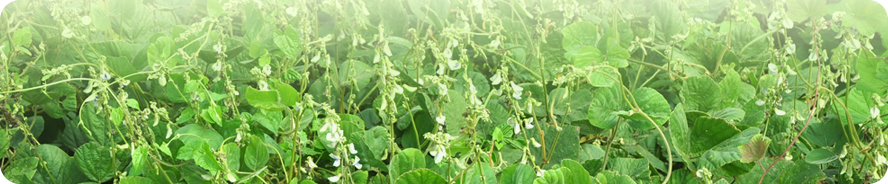
A very popular cover crop in India. It is a vigorous twiner and creeper that can be propagated by seeds and cuttings. The plant can stand strong sun and smothers weeds, even Chromolaena. The seed rate is about 3–4.5 kg per ha.
2. Mucuna bracteata
A wild legume Mucuna bracteata collected from Tripura is drought resistant and shade tolerant. It is also not eaten by cattle. Nitrogen fixing capacity of this was found to be high. It grows fast and covers the field very quickly. Since the growth is very thick and luxurious all weeds are suppressed.
Older leaves are shed during December and they form a thick layer of mulch. After that new leaves and inflorescences develop. Flowering is in February. However fruit set is not seen in Kerala even after hand pollination and treatment with plant growth regulators. Manuring and pest control operations also did not result in fruit set. However, normal fruit set is reported in Tripura.
During monsoon new roots develop in the nodes of the vines lying on the ground. Heavy nodulation was noticed in pot culture. Nodules are much larger than those of the other cover crops. Nodules formed earlier were round and pink and those formed later were coralloid, branched and dark in colour.
The seed rate is 200 g for planting in 420 points (1 ha). Stem cuttings can also be used for propagation, but the percentage of success is low. Actively growing vines having two nodes are used for establishment. A slanting cut is given 1 cm below the lower node and this is planted in polybags filled with 1 kg of field soil mixed with 50 g of dried cow dung. Partial shade is given using shade net or coconut leaves.
3. Calopogonium mucunoides
This is a native of Tropical America. It is a twiner and creeper with tolerance for poor soils. The legume dies off during dry months. It is a prolific seeder. Seed rate is 3–4.5 kg per ha.
4. Centrosema pubescens
This legume is also a native of Tropical America. It is a perennial climber that can grow in shades. It is a slow grower, not tolerant to wet conditions and smothers other weeds. The seed rate is 3–4.5 kg per ha.
Among the four, Pueraria phaseoloides is the best as it is easier to establish. Both Pueraria and Mucuna grow faster and smother weeds better than others under the conditions in South India. Therefore Pueraria/Mucuna is recommended in all areas at the time of planting itself. A mixture of Pueraria and Mucuna in equal proportions may persist better.
Establishment of Cover Crops
Cover crops are to be established in new plantings immediately after clearing the area for planting and in replanted areas, one year ahead of planting, if possible, or after felling the old stand of rubber. Either seeds or cuttings may be used.
If cuttings are used, fresh cuttings, two or three feet long, should be planted when frequent rains are available during June or July. If seeds are used, they should be sown in prepared patches during May after pre-monsoon rains. This will ensure proper establishment before drought season.
Pre-treatment of Seeds
Cover crop seeds contain a large number of hard-coated ones which fail to germinate under ordinary conditions. Certain pre-sowing treatments are therefore warranted.
Acid Treatment
Seeds should be soaked in concentrated sulphuric acid in an acid-resistant container and stirred occasionally. Recommended soaking durations are:
- Pueraria – 10 minutes
- Calopogonium – 20 to 30 minutes
- Mucuna – 30 minutes
It is not advisable to treat Centrosema seeds with acid. Treated seeds should be washed thoroughly in water before sowing.
Hot Water Treatment
Hot water (60–80°C) should be poured over the seeds and kept submerged for 4–5 hours. Soaking beyond this period is detrimental.
Abrasion Treatment
Seeds are mixed with sand and gently ground to scarify the seed coat. After treatment, seeds may be soaked overnight before sowing. Mucuna seeds may be scratched over sandpaper or a rough cement floor.
Bacterization of Cover Crop Seeds
Bacteria belonging to the genus Bradyrhizobium form nodules in the roots of leguminous cover crops and fix atmospheric nitrogen. Seed inoculation improves nodulation and growth, especially in acidic rubber-growing soils.
For inoculating one hectare, pre-treated seeds are mixed with a paste of 125 g wheat flour, then with 200 g of Bradyrhizobium inoculum, followed by 1.5–2.0 kg of chalk powder or rock phosphate. The mixture is stirred and pelletized before sowing.